This week in my British Media class we were lucky enough to see Harris Dickinson’s directorial and screenplay debut, Urchin, at The Garden Cinema, an independent theater here in London. Urchin follows Mike who is an addict living on the streets of London. He uses violence, panhandling and robbery to help himself get by until he gets into an altercation with a man that forces him to go to jail. After his time in jail he gets sober, gets a job as a line cook at a hotel, and stays in a hostel. The audience watches on as Mike continues to spiral and get sucked into the most unsavory aspects of addiction to no happy end. Overall the film was a discomforting piece of storytelling by Dickinson that completely steps over the more common trajectory of a British coming of age drama and favors something more feral and definitely less resolved. I only have a small prior knowledge of British independent films but from the ones that I have seen, Urchin follows that tradition of honoring authenticity by using grit and ambiguity as an ideology or way of life rather than as texture or volume to fluff up the film.
I wonder what caused Harris Dickinson to pursue telling a story like Mike’s. As a director and screenwriter he seems less interested in condemning the society that would punish and make things harder for a character like Mike, and more interested in letting the audience feel each bump and bruise for ourselves from the inside out. The film has a buzzing energy that feels just as erratic and intentional as Mike’s ever changing motives throughout his journey. It’s always threatening to rip apart which feels appropriate considering this is the type of character who seems stitched together by impulse and pain more than support and self-reassurance.
I have not done much research on the interviews that the cast has done for Urchin but I gather that Harris Dickinson did not create this film for us to fall in love with it as a whole or as Mike as a character. There’s power in creating a film in an age where aesthetics and prestige takes the forefront over quality storytelling. Although this is his independent filmmaking debut, Harris Dickinson’s direction implies his observational acumen for tension, tone, catharsis, and the importance of being able to convey a level of discomfort that allows the audience to relate to a character that they may not want to like. For a first film I’d say that it was absolutely well done and I can’t wait to see what the future of British indie film has to offer.
The Boys on Amazon Prime is a controversial, blood-soaked, satirical commentary on the superhero genre and the American justice system. Challenging topics like systemic racism, corporate greed, addiction, abuse of power, political power, parasocial relationships, gender, sexuality, inequality, and assault to name a few, The Boys questions all aspects of the toughest experiences humans can go through, but through a superhero lens. The series takes the question, “What would happen if the heroes were actually the bad guys?” and spins it on its head. Characters like Starlight, Homelander, The Deep, and Queen Maeve help shine a light on American culture in which male dominance is maintained through objectification, coercion, and strategic manipulation of women’s identities.
In the first season of the show, the audience is introduced to a superhero named Starlight, whose civilian name is Annie January. Upon joining what is considered the Avengers of The Boys universe, known as The Seven, Starlight is the victim of the first striking commentary on gendered abuse in the workplace. Starlight is coerced into a sexual act by The Deep, a member of The Seven, under the guise of him being the determining factor in whether or not she will actually be joining the team. Deep’s exploitation of his perceived seniority and the “threat” to Starlight’s career mimics the tactics used by men in positions of power across multiple industries. On their first mission together after the assault, Deep reflects on his own objectifications, claiming that Vought, their employer, only values him for his muscles and attractive features. It’s an ironic reversal of gender norms but clearly underscores his lack of understanding of systemic inequality. Unlike The Deep, Starlight has to prove her competence to her employers and her team, while fending off sexualization and maintaining her morals. In this scene they share together, Starlight confronts Deep about the lack of care for her as an individual and as a coworker and lets him know that she will no longer be taken advantage of. He tries again to manipulate her into staying quiet, and she threatens to burn his eyes out if he ever touches her again and unsurprisingly that is the only way he agreed to leave her alone. Her demand for respect delivered with unwavering authority signals a shift in sense of agency, but also reflects to the audience the reality that for some women, the only language that deters harassment is one rooted in fear or threats.
This portrayal of workplace harassment was a nod to the testimonies and efforts made by the #MeToo movement which is made light of by Deep in a culminating fight between him and Starlight in season 4. In this long awaited moment Deep says, “‘First, you tried to cancel me, victimize an innocent man because I guess that’s just cool to do to white guys nowadays. But jokes on you, #MeToo’s over sweetheart, it didn’t work. I do not respect your truth, I do not honor and cherish your story, and I do not f*cking apologize’” The Boys, Episode 7 (The Insider). This take on this type of individual criticizes those who wrongfully assume the victim in situations where they ignore the mental health and safety of those in subordinate positions. Starlight publicly shared her story in season one of the series, so for years the character endured penalization by the company’s PR teams and CEO for making them look unsavory. Starlight as a character challenges the type of dangerous rhetoric that bashes survivors for speaking out against sexual harassment and assault and forced the audience to confront any biases that would align them anywhere but with the survivor of abuse. Starlight’s trauma in the show is not presented as sensationalized or isolated within the context of the show or to the watchers at home. Instead, it becomes a central part of her character arc, embodying the unfortunate reality of how institutional structures can often enable or ignore such violations.
Another example of how The Boys critiques concepts of gendered power is through the only other female superhero in the first season, Queen Maeve. Despite privately identifying as bisexual, Homelander, Maeve’s ex boyfriend and coworker (but workplace superior through threats of violence and blackmailing), forcibly outs her as gay on national television. This manipulative play was designed to control her image and commodify her sexuality for corporate and political gain. Homelander’s selective mislabeling despite knowing otherwise addresses a patriarchal tendency to suppress and appropriate female identity for spectacles sake. In the wake of Vought catching fire for a lack of diversity in The Seven, Homelander took efforts into his own hands to boost LGBTQ+ ratings. Maeve isn’t being celebrated for her authenticity, but turned into a marketable product for Vought’s use. Upon Homelander’s statements, Vought completely rebrands Queen Maeve’s superhero persona to be overtly proud of her queerness, hijacking her personal life to serve Vought’s progressive facade. This storyline mirrors how large corporations and institutions often tokenize LGBTQ identities to serve their profits, while maintaining underlying structures of exclusion and control within the workplace. It is reminiscent of the corporate pinkwashing that companies executed for Pride Month in previous presidential administrations. When consumers notice that companies may be using these tactics as a form of improving business engagement, it questions the same issue I previously mentioned. In their study of corporate pinkwashing, Berbers and Boukes write, “… participants questioned if the communication reflects a true desire to support LGBTQIA+ people as they do not know if the organization treats their LGBTQIA+ employees well and/or criticize organizational behavior viewed as unsupportive, meaning that the organization are using LGBTQIA+ people for their own benefit” (Berbers & Boukes, 23). The company that preaches about equality, but does not treat its employees with a shred of respect that they claim to demand from the world on their behalf is performative allyship in its truest form.
The Boys continues to challenge gender dynamics in the workplace through Starlight standing up for herself when Vought wants to change her hero costume. After getting caught on video saving a girl from sexual assault in civilian clothes, Vought CEO Madelyn Stillwell tells Starlight that they are rebranding her as a ball-busting feminist to save face in the eyes of the public since she was seen out of uniform “assaulting” three men. Her original costume is scrapped and she is given a new one that is incredibly revealing despite that aesthetic not aligning with her morals or her mission as a hero. When she’s forced into the hypersexualized uniform by Vought, the company justifies the outfit as “empowering”, a nod to the corporate feminism tactic where exploitative optics are rebranded as empowerment. Judith Butler theorized that gender identity is not a stable essence but the product of repeated expressions. “…there cannot be a gender identity before doing gendered acts. This is also reflected by Butler’s comment that there “is no gender identity behind the expressions of gender; that identity is performatively constituted by the very ‘expressions’ that are said to be its results” (Ton, 9). The defining act of being a woman who experiences assault or coercion is essentially what Vought views as Starlight “reclaiming her femininity”. It lacks a true feminist identity because there is no genuine essence behind any given “expression”, only the performance. These performances being profit-driven exposes just how hollow these “feminist acts” really are. In its depiction of workplace harassment, identity politics, and the commodification of women’s bodies, The Boys serves as a thought-provoking allegory for the contemporary socio-political workplace landscape.
References
Berbers, A., & Boukes, M. (2024, August 2). Rainbow fatigue:
The effect of LGBTQIA+ corporate social advocacy communication on organizational legitimacy. Amsterdam School of Communication Research, University of Amsterdam.
Ton, J. T. (2018). Judith Butler’s notion of gender performativity
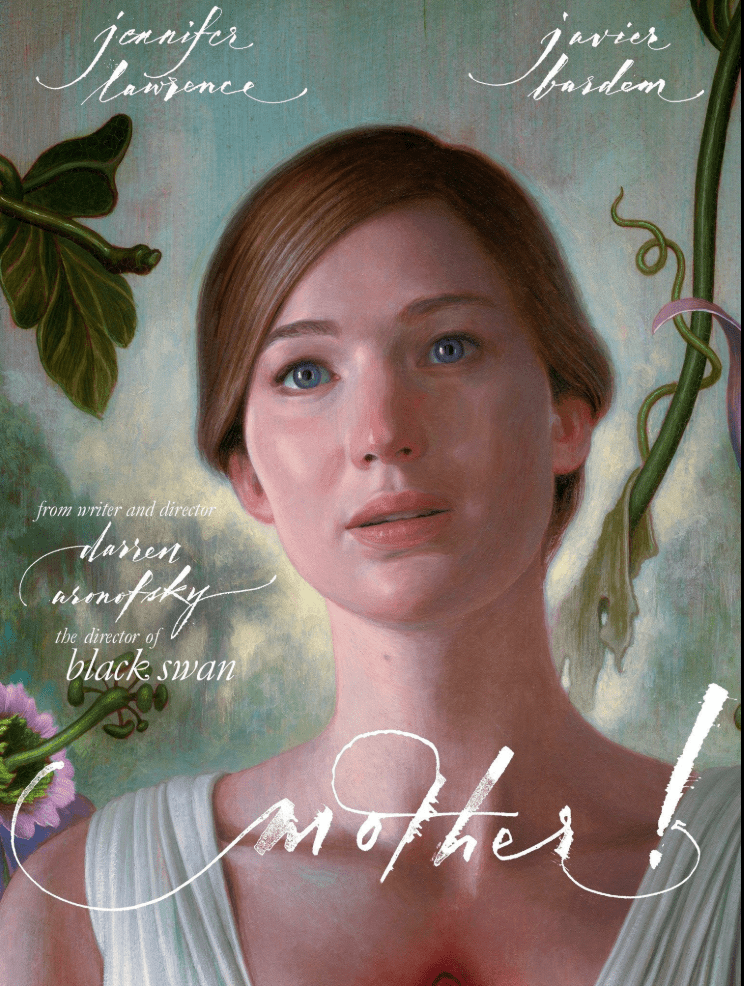
Darren Aronofsky’s mother! (2017) is a film that strived for artistic depth but ultimately collapses under the weight of its own ambition. It’s marketed as a psychological horror, but that would only ring true if the audience is strictly women, as all of the psychological damage happens to our perfect female protagonist. The film quickly abandons traditional storytelling in favor of innumerable allegories and graphic and chaotic symbolism. The hyperbolic elements that adorn every aspect of the storytelling reduce the moments to mere spectacle while hiding the weaknesses in the narrative. The film bombards viewers with unwavering intensity, not allowing for genuine suspense or any connection, which is a foundation necessary for effective storytelling. As a result, mother! feels like the most disjointing, fever-dream-like singular experience whose shortcomings fall on the erratic pacing, a lack of character motivations, and over-reliance on symbolism, culminating in an exhausting two hours and one minute.
The film follows a young woman called Mother living in a very secluded house with her husband, Him, who is a poet. As she renovates their home from what the audience learns was a house fire, many unexpected guests start to arrive, starting with a mysterious and secretive man who later invites his sexually provocative wife. These first uninvited guests serve as representations of Adam and Eve, as Man has an illness which is later to be discovered as cancer, and a contusion on his back rib cage. They invade Mother’s home, are unruly house guests, invade their privacy, and set up the story for the eventual chaos. The next characters to arrive are Man’s and Woman’s sons, who are set up to represent Cain and Abel. Due to the understated context surrounding the father’s will, The Brothers show up at Mother’s house and start fighting with one another until one gets murdered in a jealous rage. The violence that occurs in the house is just foreshadowing the destruction and violence that consumes Mother’s home throughout the film. As the poet’s fame grows, crowds of worshippers flood into the house, turning it into a literal war-torn battlefield. The followers of Him possibly symbolize the dangers of blind faith and fanaticism, showing how, ultimately, people destroy what they idolize, but there is no real action that grants the audience comprehension. What Aronofsky loses in plot points, he makes up in cinematography for the intense and flawless transitions throughout the house as it morphs and changes into a nightclub, to a battlefield, to a refugee camp, and finally into a complete shrine at the end.
The film makes use of the obscure nature of the setting. Aronofsky’s decision to forgo a soundtrack leaves the film feeling stark and at times hollow. It is oddly quiet with minimal sounds of nature, but the foley is too loud in comparison to the action and mood of the scenes. Even in actions as simple as walking barefoot down the stairs, the booming sound of Mother’s feet feels out of place for the setting of a beautiful country home at daybreak. This choice may have been intended to enhance realism and unease, but ultimately is contributes to the alienating aspect of the film, further driving a wedge between the audience and connecting with the already disjointed material. Without a score, mother! Relies solely on sounds like creaking floorboards, sudden noises, and murmured dialogue to create tension and suspense. The overwhelming sensory assault in this film leaves little room for emotional nuance, which is executed by acting and directing, but bolstered by intentional sound design or scoring. This makes it difficult to track the tonal shifts and changes in moments of chaos where the audience cannot rely on the actors for context.
In the most horrifying and objectively most unnecessary scene in the film, Mother and Him’s newborn baby gets passed around as the metaphorical Jesus the Messiah is viewed by the people. As the baby is crowd surfing through Him’s followers moments after his birth and against Mother’s will, we hear an unfortunate and deafening crack. Unsurprisingly, the baby’s neck snaps, resulting in his death. The followers in the house then recite the same eulogy that they gave for the brother who passed early in the film before proceeding to cannibalize the child’s remains (eating the body of Christ). This sequence marks a moment where Aronofsky’s portrayal of women becomes troubling. In an act of sheer brutality, Mother is being viciously assaulted while gendered, pointed slurs are being screamed at her. The extended nature of this scene, combined with its relentless violence for the sake of the story, raises questions about the film’s treatment of its female protagonist and whether it respects or values its female lead beyond her suffering.
Unfortunately, this film never leaves the viewer satisfied. Nothing you want to happen happens, and if it does, like people leaving the house for example, it’s short-lived. I suppose it could reflect the frustration that our ‘creators” or Mother Nature feels, but it leaves for an unpleasant viewing experience. Sometimes a film can get lost in its own plot, in its own writing and then you lose the story completely which is exactly what is happening here.
While the film attempts to weave biblical, environmental, and existential themes into a psychological horror formula, mother!’s abstract storytelling and chaotic structure make it a frustrating, rather than compelling, experience. Despite the narrative shortcomings, the film is technically executed well. Aronofsky’s direction creates an unrelenting sense of malice and claustrophobia, while the adaptive POV style cinematography immerses the audience in Mother’s world. With Jennifer Lawrence’s raw and emotionally charged performance and Javier Bardem’s self-centered and detached personification of the character Him, the film’s visual style and immersive (yet erratic at times) camera work translate the artistic passion behind the film, even if the story itself fails to engage.
*Written May 1, 2025 (before the film’s theater release)*
I hated every minute of training, but I said ‘don’t quit’. Suffer now and live the rest of your life a champion.
Muhammad Ali
Introduction
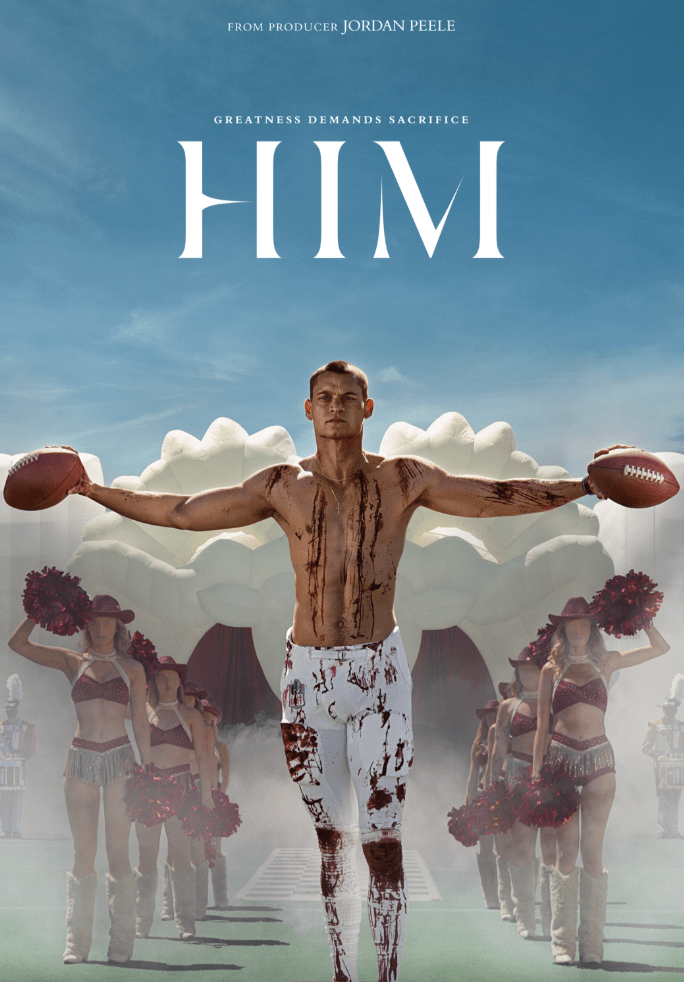
HIM is an upcoming sports horror film directed by Justin Tipping, produced by Jordan Peele. The first teaser trailer begins as an inspirational depiction of the hard work, dedication, and payoffs that are achieved through dedication in football training. It is underscored by an upbeat violin motif, backed by hip-hop 808s that let you know just how black this film is. The first half of the trailer features a voiceover by Marlon Wayans (the coach) giving a motivational speech about digging deep, not taking days off, and pushing your mind and body towards greatness. This is all cut short when we see the main protagonist collide head-first with another player as the screen simultaneously shifts to x-ray vision. We then see intense close-ups of inverted bloody images, violent training practices, demonic rituals, performance enhancing drugs, and the general horrors of American Football, specifically possible effects of CTE or chronic traumatic encephalopathy. The teaser trailer for HIM builds on the historical, cultural, and societal impacts of American football and CTE as well as the exploitation of black male bodies for the sake of entertainment.
A poster for this trailer, an upright football adorned with crooked staples, dripping with blood in an enclosed glass case symbolizes the preservation of American football despite the harmful medical, historical, cultural effects and implications of the sport.
Semiotics
The ideology surrounding African-American athletic achievement has often been considered a contribution to advancing the black race as a whole amongst black leaders. Marlon Wayans being cast as the coach solidifies this ideal, as his presence symbolizes, “… the idea that for African-American males living in impoverished inner city areas, sports are viewed as the only legal way to gain social respect and access to mainstream material success”, which is a conflated notion of race and what black people are capable of (Brooks & Blackman, 2011, p.444). As black people operate within the sphere of the white gaze, there is an unfortunate aspiration to be desired and respected in the eyes of white America, especially in the field they most adore: football.
The third and fourth images depicted in the trailer are of three aircrafts respectively flying red, white, and blue smoke over a football stadium, representing the overarching theme of American nationalism looming overhead. Erica Childs writes, “The black athletic male is embraced by whites in an attempt to ‘domesticate and dilute its more ominous and subversive uses,’ while using the black athlete for pure consumption and profit” (Childs, 1999, p.13). Although the coach featured in the trailer is not white, there are lingering undertones of the treatment that black men went through during America’s founding. The tagline, “What are you willing to sacrifice?” is reinforced throughout the trailer in the form of repetition; pushing one’s self to the absolute physical and mental limits and abuse of black bodies for the sake of white gain, whether that gain is monetarily from the team owners, or entertainment gains from the networks and spectators.
The semiotics within the movie poster’s graphic design alludes to one of the more gruesome, yet lesser known facts about American history: slave leather. As leather became a symbol of luxury in 19th-century America, more and more white people were seeking out ways to become more fashionable, so naturally, human leather was the best option. The article, “LEATHER FROM HUMAN SKIN,” published in The Mercury on March 17th, 1888. The author writes, “He obtains the skins from the bodies of negroes which have been dissected in one of our big medical colleges. The best leather is obtained from the thighs…One of the dudest dudes in town carries a match-safe covered with a portion o f the skin of a beautiful young woman who was found drowned in the Delaware river. It still retains its natural colour. Another young man with whom I am acquainted carries a cigar case made of negro skin, a ghastly skull and crossbones appearing on one side in relief. One of the best known surgeons in this country, who resides in this city, has a beautiful instrument case, entirely covered with leather made from an African’s skin”. With the knowledge of this heinous reality, one can interpret the encased football with staples dripping with blood as a continuation of the “black people as subhuman” ideology. These signs within the texts connect how audiences understand race as they force the watcher to come to terms with underrepresented horrors within the black community.
Audience Position
Based on the multiple themes depicted in the trailer, it is quite difficult to interpret who the intended audience for this film could be. Based on the semiotics in the trailer, I believe the intended audience will shift towards those who enjoy horror, sports, the dark underbelly of the entertainment industry,as well as racial and religious commentary. Based on certain aspects of the intended viewer’s life, their own identity could be taken into question as the film appears to be questioning the sanctity and glorification of black athletic achievement. Those who have a close relationship to football may feel exposed or called-out by this overtly gruesome take on the dangers of football, as well as the slippery slope of sacrificing everything for fame and glory.
Audience Response
Feedback from audiences of the teaser all appear to be grounded in interpreting the semiotics of the text multiple ways, due to the inherently stacked structure of the trailer. The audience has taken a more negotiated reader position as there are comments reiterating the obvious messages in the trailer in addition to added nuances that stem from their own personal experiences or research.
I believe the audience is reading the trailer in the way that it was intended because of the nature of films that are produced by Jordan Peele. As this film comes from his production company, audiences are compelled to dissect and analyze any possible meaning that could be extracted or interpreted from any piece of media that has his name attached to it. I would say that this trailer is structured to garner that response from audiences not only to generate buzz and excitement for the film, but to also give the reader a personal stake in the outcome of the film. There weren’t many mentions of inadvertent messages in the text with commenters even going as far as to say that people were looking too closely at the trailer, arguing the true premise is obvious and in our faces. It is difficult to confidently say that the film is resonating with the intended audience because it is unclear who the audience is. For those who are fans of Jordan Peele, they feel misled on the quality of the film as he is not directing it, so that automatically removes his audience (hyperwoke analytical film buffs) from the conversation.
Conclusion
The trailer and poster for HIM (2025) work directly against social, political, and cultural norms. As it stands as a teaser, it is too early to decide whether this piece of promotional media helps or hurts social progress. It spreads awareness for CTE, but at the same time the varied subliminal messaging can confuse the viewer on the problems presented. The nature of a Hollywood horror commentary is automatically divisive, but with the added elements of sports, race, nationalism, and masculinity, it is clear that this film, or at least the trailer, is an unambiguous evaluation of how Hollywood and sports have conflated and commodified the black male athlete.
I am America. I am the part you won’t recognize. But get used to me. Black, confident, cocky; my name, not yours; my religion, not yours; my goals, my own; get used to me.
Muhammad Ali
References
Brooks, S. N., & Blackman, D. (2011). Introduction: African Americans
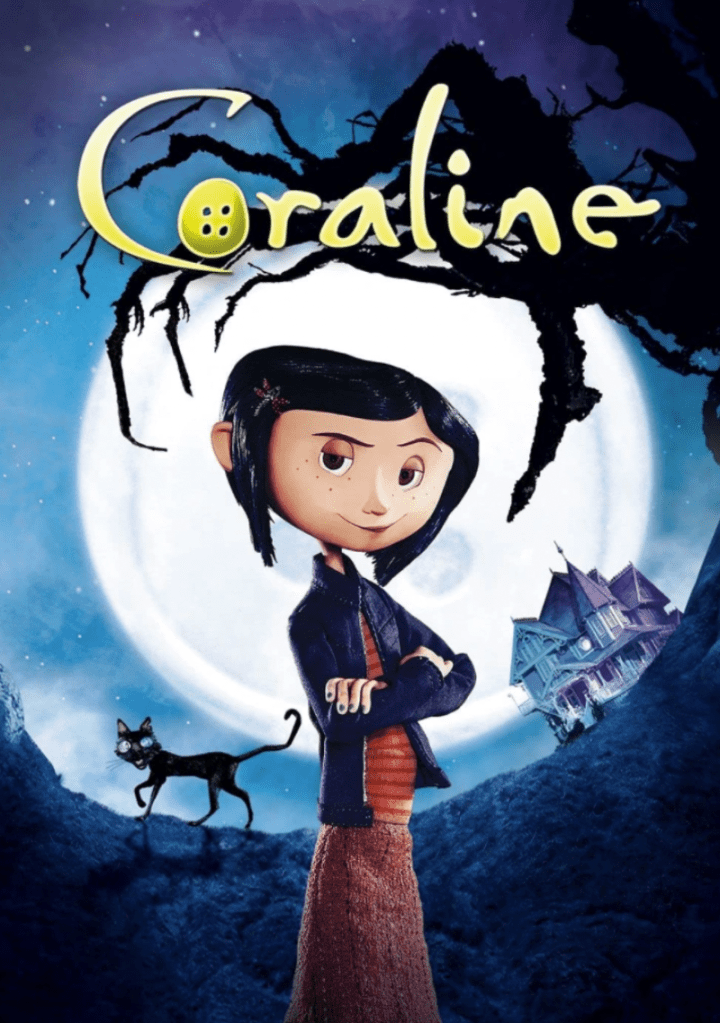
Everyone has a film that they turn to in specific moments of their life—a film that evokes nostalgia, reminds them of what once was and what could be. Moments of cinema that inspire and allow escapism to take precedence for just a few hours. For some, that film is Henry Selick’s 2009 masterpiece, Coraline. As a dark, fantasy horror film teetering between a whimsical, fantastical world and a grueling, unremarkable reality, Coraline highlights the modern-day horrors of childhood neglect and the mundanity of adolescence.
From the mind of Neil Gaiman comes a modern take on the female hero’s journey. Upon moving to a new state, Coraline Jones, a curious and adventurous young girl discovers a tiny hidden door in her new home that leads to an alternate reality. In this parallel world, everything seems perfect. With an “Other” mother who cooks elaborate meals and hand-sews stylish outfits, a father that sings clever little songs and has a magnificent, lifelike garden, and thoroughly entertaining neighbors, Coraline has no desire to wake up from this dream. But it’s not a dream, and everything is not what it seems. She soon realizes the sinister truth behind the Other World and must face the dark reality of her unravelling fantasy. Coraline must summon the courage to save her family while navigating the complexities of self-discovery, bravery, and the consequences of her own desire.
Diving head first into this uncanny dream, anyone with an eye for cinema will recognize that Coraline is a masterclass in worldbuilding. The contrasts between the real world and the Other World are noticeably incongruent both aesthetically and emotionally. Set in the spring of Ashland, Oregon, the film displays a drab, gray, and rainy atmosphere, devoid of color and riddled with formal structure. From the perfectly scalloped border of the rectangular burnt-orange background in the opening credits to the barren trees that stick straight up with spine-adjusting rigidity, no stone was left unturned when it came to establishing just how static and unyielding Coraline’s life has become since moving to the Pink Palace Apartments. This is evident on Coraline’s first visit to the Other World. Upon opening the hidden door, she is met with an accordion-like tunnel that expands by the second, pulsating with vibrant hues of cobalt and amethyst. This is the first splash of color the audience is introduced to outside of her bright yellow raincoat and electric blue asymmetrical bob.
Experiencing the tunnel for the first time evokes emotions in her that the viewer has not yet seen: confusion, followed by bewilderment and disbelief, and finally, what could only be described as curious determination. Once Coraline enters the other world, everything is highly saturated, intensely imaginative, and all that an 11-year old would be fascinated by. Throughout the film, the protagonist has many visceral reactions to vibrant colors and hues. Since this is a stop-motion picture with more than 15,000 hand-sanded and painted faces for all of the characters and over 6,300 face replacements for Coraline alone, each emotion and reaction displayed is not a coincidence. Her relationship to color and variety is reflected through these subtleties, and the filmmakers worked tirelessly to ensure that these nuances were translated nonverbally.
Moments throughout the film that further reinforce the disparity between Coraline and the reality she resides in. One such moment is when her real mother takes her shopping for school uniforms. Coraline picks up the only article of clothing that is not a shade of muted gray—a dynamic pair of lime green and orange gloves. She is immediately shut down by her mother who refuses to purchase them for her. Upon first viewing, the scene may not appear significant, but considering the fact that when Coraline begs for the gloves and her mother says no, she responds with, “My other mother would get them for me,” to which her mother retorts, “Maybe she should buy all your clothes” we begin to understand its impact. This line, facetiously delivered by Teri Hatcher, largely contributes to what makes this film relevant to audiences of all ages. Despite knowing that her parents are unemployed and their career endeavors leave her subject to neglect and isolation, she picks up the most expensive gloves in the sale pile— $24.99—and subconsciously triggers her mother’s maternal and financial insecurity. This scene is the final blow to Coraline’s relationship with her real mom. Not only does the Other Mother provide Coraline with new clothes during her next visit, but since her true form is a spider seamstress with needles for appendages, she handmakes—-no pun intended—a new outfit for Coraline, a vibrant blue sweater with sparkly white stars. From a character development perspective, this validates Coraline’s childlike wonder, making her feel seen in her style choices, but also solidifying the maternal bond Coraline desperately craves.
The beast that is stop-motion animation takes a keen eye and a strong sense of patience to accomplish. After Henry Selick received an early version of the story from Neil Gaiman in 2000, prior to the novel’s official release in 2002, “Coraline” underwent over four years of production, including 18 months of pre-production and two years of principal photography before hitting theaters. The 35 animators that contributed to the film were averaging 2.22 to 6.52 seconds of footage per week. Under the visionary direction of Henry Selick, renowned for The Nightmare Before Christmas, the film was released to audiences in February 2009. During this groundbreaking production, LAIKA Studios emerged as pioneers in the use of 3D-printed facial replacements.
The attention to detail in the film plays a large role in character development. For Mr. Bobinsky, Coraline’s neighbor and eccentric Russian ringleader of a jumping mouse circus, played by Ian McShane, the details seem boundless. His stature is rat-like as he is tall and has a noticeably large gut. Bobinsky has an extremely long wiry black mustache, closely resembling whiskers and his beady eyes sit slightly above his long rat-like nose. Atop his stained and tattered A-shirt and short shorts, he proudly wears the medal of a Chernobyl liquidator, and although it is not explicitly stated in the film, one can infer that his pale skin which is blue, is due to nuclear radiation poisoning. Some of the other details pertaining to character personality and intention are less obvious, such as Coraline’s neighbors, Miss Spink and Forcible. These two superstitious lesbian actresses, whose lives center around their former careers and obsession with their Scottish terriers, act as the oracles who help guide Coraline on her hero’s journey. As this is a modern day hero story for young girls, she seeks advice from the most opinionated, independent women in the film.
The reason Coraline repeatedly returns to the other world lies not in its whimsical nature and its enhancements, but in the companionship and nurturing she craves and which she receives from her Other Mother and father. The most nourishment Coraline receives from her real mother comes in the form of a multivitamin. She is often cast aside and ignored by her parents which motivates her to seek out relationships from her other parents. Blinded by her desire to be loved, Coraline fails to notice the eerie nature of the parallel dimension. Initially put off by everyone having buttons for eyes, it isn’t until the Other Mother shares the rules of her world—that Coraline can only stay if she lets her sew buttons in her eyes—that Coraline comes to the realization that all that glitters isn’t gold. The lesson here is to be grateful for what you have, even if it feels like it’s not enough. As a child, one might side with Coraline as her distress is evident, but once grown and evolved, that same person will understand the complexities of being a parent in today’s society. The hair-raising soundtrack and score, composed by French composer Bruno Coulais, create harrowing moments throughout the film. Without the masterful use of sound design, accompanied by the subtle visual cues to help build tension, the horror aspect of the film would be disregarded. The clever utilization of a made-up language in the soundtrack contributes to the unfamiliarity of the unsettling atmosphere that Selick has crafted. When taking a deeper look at the film, one can find themselves just as enthralled by the whimsical landscape as the protagonist. The foreboding suspense feels like a true betrayal. With striking visuals, disconcerting melodies, eccentric characters, and an overall message that resonates with viewers of all ages, Coraline (2009) is a timeless piece that continues to inspire even 16 years after its initial release.




 tai's media mind