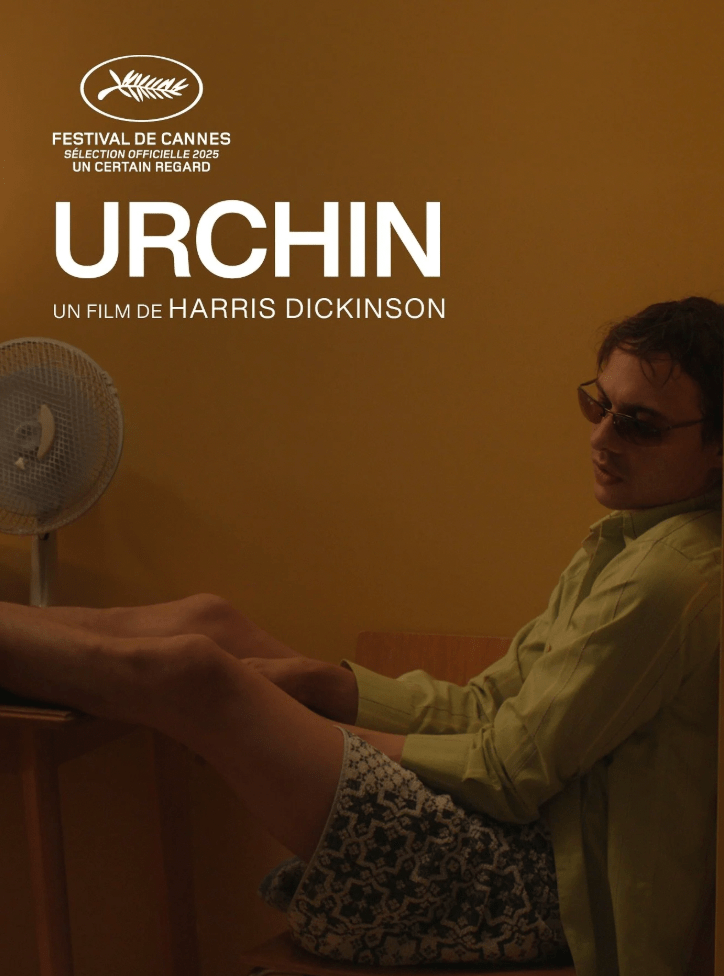
This week in my British Media class we were lucky enough to see Harris Dickinson’s directorial and screenplay debut, Urchin, at The Garden Cinema, an independent theater here in London. Urchin follows Mike who is an addict living on the streets of London. He uses violence, panhandling and robbery to help himself get by until he gets into an altercation with a man that forces him to go to jail. After his time in jail he gets sober, gets a job as a line cook at a hotel, and stays in a hostel. The audience watches on as Mike continues to spiral and get sucked into the most unsavory aspects of addiction to no happy end. Overall the film was a discomforting piece of storytelling by Dickinson that completely steps over the more common trajectory of a British coming of age drama and favors something more feral and definitely less resolved. I only have a small prior knowledge of British independent films but from the ones that I have seen, Urchin follows that tradition of honoring authenticity by using grit and ambiguity as an ideology or way of life rather than as texture or volume to fluff up the film.
I wonder what caused Harris Dickinson to pursue telling a story like Mike’s. As a director and screenwriter he seems less interested in condemning the society that would punish and make things harder for a character like Mike, and more interested in letting the audience feel each bump and bruise for ourselves from the inside out. The film has a buzzing energy that feels just as erratic and intentional as Mike’s ever changing motives throughout his journey. It’s always threatening to rip apart which feels appropriate considering this is the type of character who seems stitched together by impulse and pain more than support and self-reassurance.
I have not done much research on the interviews that the cast has done for Urchin but I gather that Harris Dickinson did not create this film for us to fall in love with it as a whole or as Mike as a character. There’s power in creating a film in an age where aesthetics and prestige takes the forefront over quality storytelling. Although this is his independent filmmaking debut, Harris Dickinson’s direction implies his observational acumen for tension, tone, catharsis, and the importance of being able to convey a level of discomfort that allows the audience to relate to a character that they may not want to like. For a first film I’d say that it was absolutely well done and I can’t wait to see what the future of British indie film has to offer.
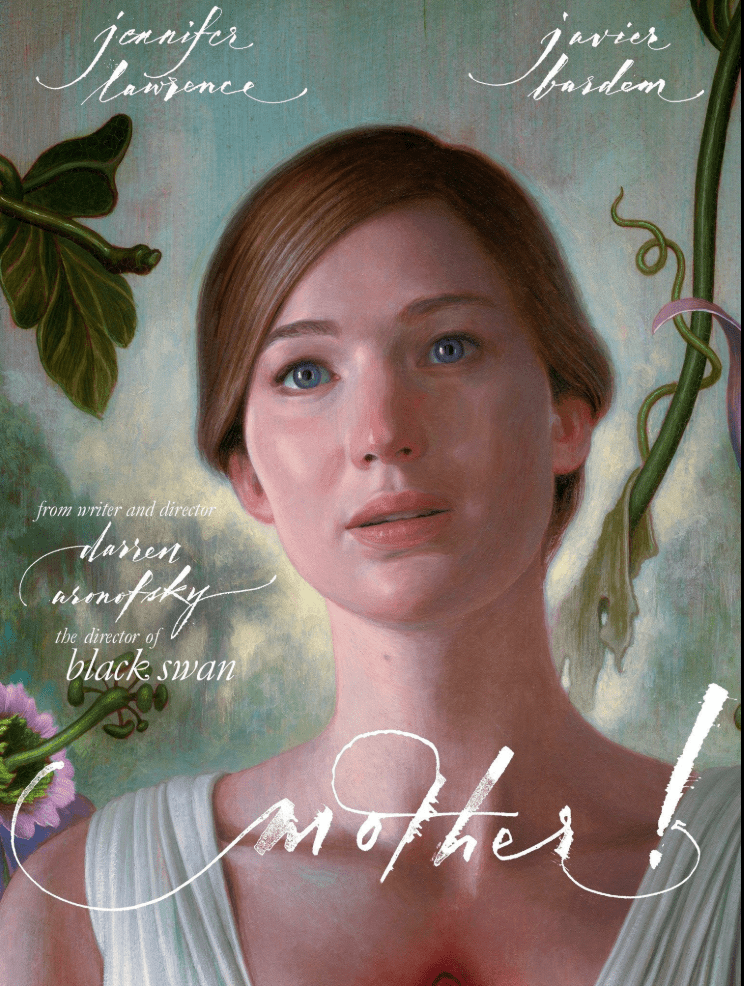
Darren Aronofsky’s mother! (2017) is a film that strived for artistic depth but ultimately collapses under the weight of its own ambition. It’s marketed as a psychological horror, but that would only ring true if the audience is strictly women, as all of the psychological damage happens to our perfect female protagonist. The film quickly abandons traditional storytelling in favor of innumerable allegories and graphic and chaotic symbolism. The hyperbolic elements that adorn every aspect of the storytelling reduce the moments to mere spectacle while hiding the weaknesses in the narrative. The film bombards viewers with unwavering intensity, not allowing for genuine suspense or any connection, which is a foundation necessary for effective storytelling. As a result, mother! feels like the most disjointing, fever-dream-like singular experience whose shortcomings fall on the erratic pacing, a lack of character motivations, and over-reliance on symbolism, culminating in an exhausting two hours and one minute.
The film follows a young woman called Mother living in a very secluded house with her husband, Him, who is a poet. As she renovates their home from what the audience learns was a house fire, many unexpected guests start to arrive, starting with a mysterious and secretive man who later invites his sexually provocative wife. These first uninvited guests serve as representations of Adam and Eve, as Man has an illness which is later to be discovered as cancer, and a contusion on his back rib cage. They invade Mother’s home, are unruly house guests, invade their privacy, and set up the story for the eventual chaos. The next characters to arrive are Man’s and Woman’s sons, who are set up to represent Cain and Abel. Due to the understated context surrounding the father’s will, The Brothers show up at Mother’s house and start fighting with one another until one gets murdered in a jealous rage. The violence that occurs in the house is just foreshadowing the destruction and violence that consumes Mother’s home throughout the film. As the poet’s fame grows, crowds of worshippers flood into the house, turning it into a literal war-torn battlefield. The followers of Him possibly symbolize the dangers of blind faith and fanaticism, showing how, ultimately, people destroy what they idolize, but there is no real action that grants the audience comprehension. What Aronofsky loses in plot points, he makes up in cinematography for the intense and flawless transitions throughout the house as it morphs and changes into a nightclub, to a battlefield, to a refugee camp, and finally into a complete shrine at the end.
The film makes use of the obscure nature of the setting. Aronofsky’s decision to forgo a soundtrack leaves the film feeling stark and at times hollow. It is oddly quiet with minimal sounds of nature, but the foley is too loud in comparison to the action and mood of the scenes. Even in actions as simple as walking barefoot down the stairs, the booming sound of Mother’s feet feels out of place for the setting of a beautiful country home at daybreak. This choice may have been intended to enhance realism and unease, but ultimately is contributes to the alienating aspect of the film, further driving a wedge between the audience and connecting with the already disjointed material. Without a score, mother! Relies solely on sounds like creaking floorboards, sudden noises, and murmured dialogue to create tension and suspense. The overwhelming sensory assault in this film leaves little room for emotional nuance, which is executed by acting and directing, but bolstered by intentional sound design or scoring. This makes it difficult to track the tonal shifts and changes in moments of chaos where the audience cannot rely on the actors for context.
In the most horrifying and objectively most unnecessary scene in the film, Mother and Him’s newborn baby gets passed around as the metaphorical Jesus the Messiah is viewed by the people. As the baby is crowd surfing through Him’s followers moments after his birth and against Mother’s will, we hear an unfortunate and deafening crack. Unsurprisingly, the baby’s neck snaps, resulting in his death. The followers in the house then recite the same eulogy that they gave for the brother who passed early in the film before proceeding to cannibalize the child’s remains (eating the body of Christ). This sequence marks a moment where Aronofsky’s portrayal of women becomes troubling. In an act of sheer brutality, Mother is being viciously assaulted while gendered, pointed slurs are being screamed at her. The extended nature of this scene, combined with its relentless violence for the sake of the story, raises questions about the film’s treatment of its female protagonist and whether it respects or values its female lead beyond her suffering.
Unfortunately, this film never leaves the viewer satisfied. Nothing you want to happen happens, and if it does, like people leaving the house for example, it’s short-lived. I suppose it could reflect the frustration that our ‘creators” or Mother Nature feels, but it leaves for an unpleasant viewing experience. Sometimes a film can get lost in its own plot, in its own writing and then you lose the story completely which is exactly what is happening here.
While the film attempts to weave biblical, environmental, and existential themes into a psychological horror formula, mother!’s abstract storytelling and chaotic structure make it a frustrating, rather than compelling, experience. Despite the narrative shortcomings, the film is technically executed well. Aronofsky’s direction creates an unrelenting sense of malice and claustrophobia, while the adaptive POV style cinematography immerses the audience in Mother’s world. With Jennifer Lawrence’s raw and emotionally charged performance and Javier Bardem’s self-centered and detached personification of the character Him, the film’s visual style and immersive (yet erratic at times) camera work translate the artistic passion behind the film, even if the story itself fails to engage.
*Written May 1, 2025 (before the film’s theater release)*
I hated every minute of training, but I said ‘don’t quit’. Suffer now and live the rest of your life a champion.
Muhammad Ali
Introduction
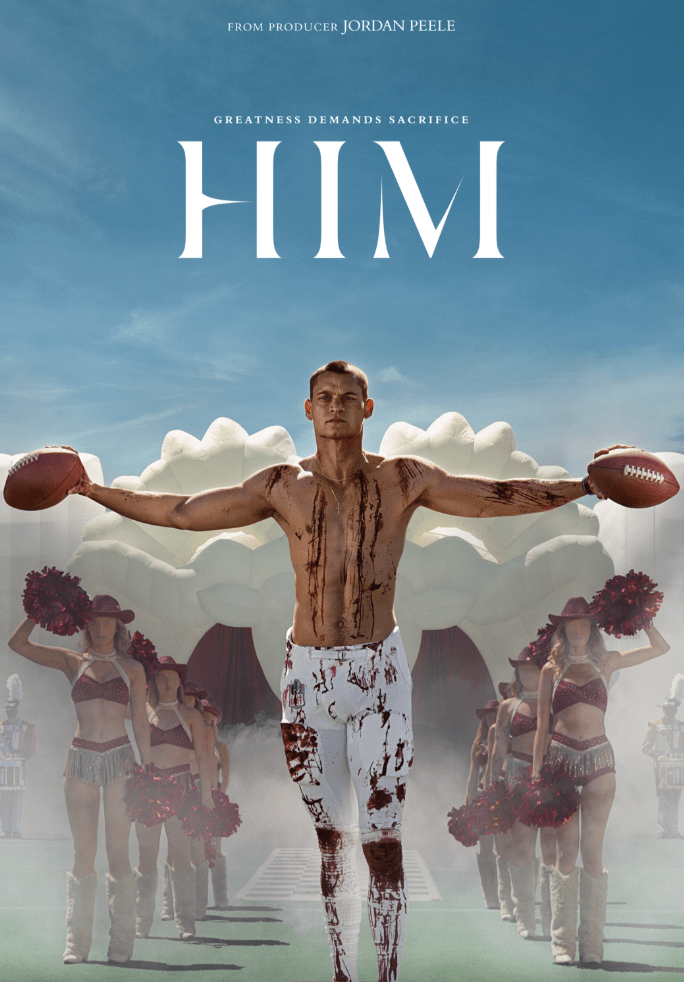
HIM is an upcoming sports horror film directed by Justin Tipping, produced by Jordan Peele. The first teaser trailer begins as an inspirational depiction of the hard work, dedication, and payoffs that are achieved through dedication in football training. It is underscored by an upbeat violin motif, backed by hip-hop 808s that let you know just how black this film is. The first half of the trailer features a voiceover by Marlon Wayans (the coach) giving a motivational speech about digging deep, not taking days off, and pushing your mind and body towards greatness. This is all cut short when we see the main protagonist collide head-first with another player as the screen simultaneously shifts to x-ray vision. We then see intense close-ups of inverted bloody images, violent training practices, demonic rituals, performance enhancing drugs, and the general horrors of American Football, specifically possible effects of CTE or chronic traumatic encephalopathy. The teaser trailer for HIM builds on the historical, cultural, and societal impacts of American football and CTE as well as the exploitation of black male bodies for the sake of entertainment.
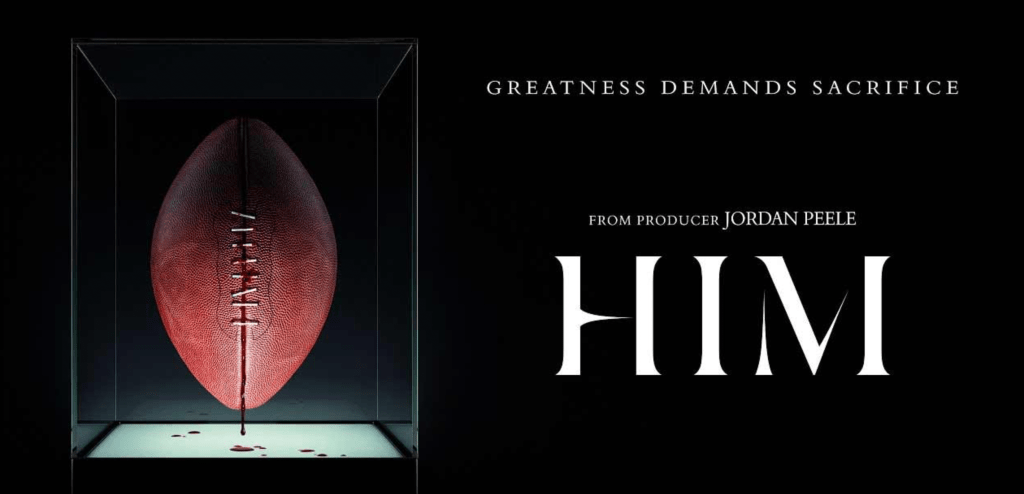
A poster for this trailer, an upright football adorned with crooked staples, dripping with blood in an enclosed glass case symbolizes the preservation of American football despite the harmful medical, historical, cultural effects and implications of the sport.
Semiotics
The ideology surrounding African-American athletic achievement has often been considered a contribution to advancing the black race as a whole amongst black leaders. Marlon Wayans being cast as the coach solidifies this ideal, as his presence symbolizes, “… the idea that for African-American males living in impoverished inner city areas, sports are viewed as the only legal way to gain social respect and access to mainstream material success”, which is a conflated notion of race and what black people are capable of (Brooks & Blackman, 2011, p.444). As black people operate within the sphere of the white gaze, there is an unfortunate aspiration to be desired and respected in the eyes of white America, especially in the field they most adore: football.
The third and fourth images depicted in the trailer are of three aircrafts respectively flying red, white, and blue smoke over a football stadium, representing the overarching theme of American nationalism looming overhead. Erica Childs writes, “The black athletic male is embraced by whites in an attempt to ‘domesticate and dilute its more ominous and subversive uses,’ while using the black athlete for pure consumption and profit” (Childs, 1999, p.13). Although the coach featured in the trailer is not white, there are lingering undertones of the treatment that black men went through during America’s founding. The tagline, “What are you willing to sacrifice?” is reinforced throughout the trailer in the form of repetition; pushing one’s self to the absolute physical and mental limits and abuse of black bodies for the sake of white gain, whether that gain is monetarily from the team owners, or entertainment gains from the networks and spectators.
The semiotics within the movie poster’s graphic design alludes to one of the more gruesome, yet lesser known facts about American history: slave leather. As leather became a symbol of luxury in 19th-century America, more and more white people were seeking out ways to become more fashionable, so naturally, human leather was the best option. The article, “LEATHER FROM HUMAN SKIN,” published in The Mercury on March 17th, 1888. The author writes, “He obtains the skins from the bodies of negroes which have been dissected in one of our big medical colleges. The best leather is obtained from the thighs…One of the dudest dudes in town carries a match-safe covered with a portion o f the skin of a beautiful young woman who was found drowned in the Delaware river. It still retains its natural colour. Another young man with whom I am acquainted carries a cigar case made of negro skin, a ghastly skull and crossbones appearing on one side in relief. One of the best known surgeons in this country, who resides in this city, has a beautiful instrument case, entirely covered with leather made from an African’s skin”. With the knowledge of this heinous reality, one can interpret the encased football with staples dripping with blood as a continuation of the “black people as subhuman” ideology. These signs within the texts connect how audiences understand race as they force the watcher to come to terms with underrepresented horrors within the black community.
Audience Position
Based on the multiple themes depicted in the trailer, it is quite difficult to interpret who the intended audience for this film could be. Based on the semiotics in the trailer, I believe the intended audience will shift towards those who enjoy horror, sports, the dark underbelly of the entertainment industry,as well as racial and religious commentary. Based on certain aspects of the intended viewer’s life, their own identity could be taken into question as the film appears to be questioning the sanctity and glorification of black athletic achievement. Those who have a close relationship to football may feel exposed or called-out by this overtly gruesome take on the dangers of football, as well as the slippery slope of sacrificing everything for fame and glory.
Audience Response
Feedback from audiences of the teaser all appear to be grounded in interpreting the semiotics of the text multiple ways, due to the inherently stacked structure of the trailer. The audience has taken a more negotiated reader position as there are comments reiterating the obvious messages in the trailer in addition to added nuances that stem from their own personal experiences or research.
I believe the audience is reading the trailer in the way that it was intended because of the nature of films that are produced by Jordan Peele. As this film comes from his production company, audiences are compelled to dissect and analyze any possible meaning that could be extracted or interpreted from any piece of media that has his name attached to it. I would say that this trailer is structured to garner that response from audiences not only to generate buzz and excitement for the film, but to also give the reader a personal stake in the outcome of the film. There weren’t many mentions of inadvertent messages in the text with commenters even going as far as to say that people were looking too closely at the trailer, arguing the true premise is obvious and in our faces. It is difficult to confidently say that the film is resonating with the intended audience because it is unclear who the audience is. For those who are fans of Jordan Peele, they feel misled on the quality of the film as he is not directing it, so that automatically removes his audience (hyperwoke analytical film buffs) from the conversation.
Conclusion
The trailer and poster for HIM (2025) work directly against social, political, and cultural norms. As it stands as a teaser, it is too early to decide whether this piece of promotional media helps or hurts social progress. It spreads awareness for CTE, but at the same time the varied subliminal messaging can confuse the viewer on the problems presented. The nature of a Hollywood horror commentary is automatically divisive, but with the added elements of sports, race, nationalism, and masculinity, it is clear that this film, or at least the trailer, is an unambiguous evaluation of how Hollywood and sports have conflated and commodified the black male athlete.
I am America. I am the part you won’t recognize. But get used to me. Black, confident, cocky; my name, not yours; my religion, not yours; my goals, my own; get used to me.
Muhammad Ali
References
Brooks, S. N., & Blackman, D. (2011). Introduction: African Americans
 tai's media mind