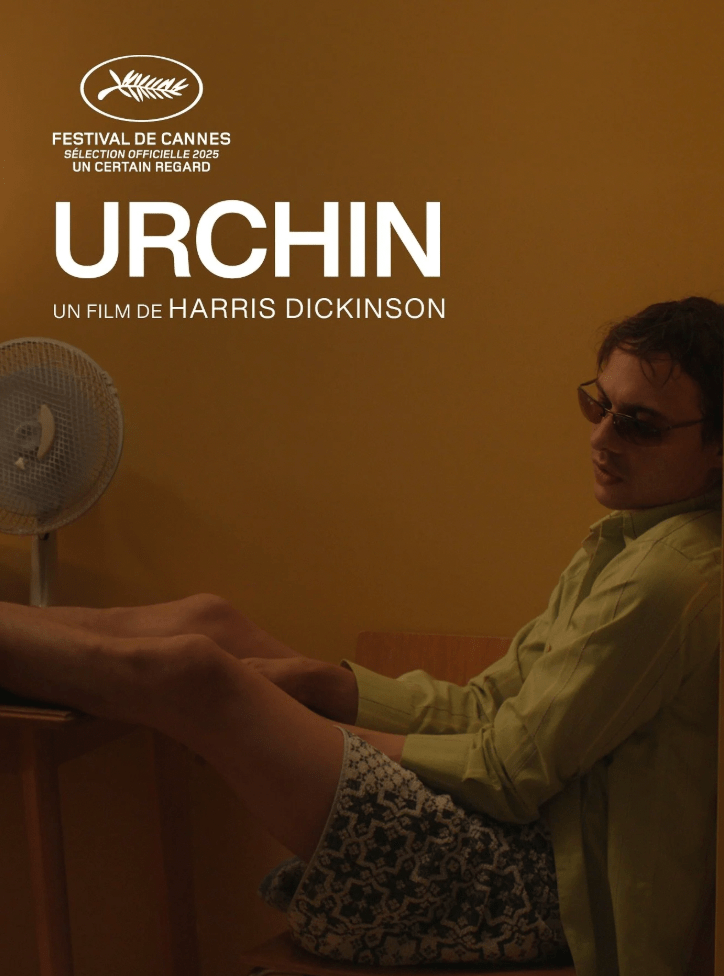
This week in my British Media class we were lucky enough to see Harris Dickinson’s directorial and screenplay debut, Urchin, at The Garden Cinema, an independent theater here in London. Urchin follows Mike who is an addict living on the streets of London. He uses violence, panhandling and robbery to help himself get by until he gets into an altercation with a man that forces him to go to jail. After his time in jail he gets sober, gets a job as a line cook at a hotel, and stays in a hostel. The audience watches on as Mike continues to spiral and get sucked into the most unsavory aspects of addiction to no happy end. Overall the film was a discomforting piece of storytelling by Dickinson that completely steps over the more common trajectory of a British coming of age drama and favors something more feral and definitely less resolved. I only have a small prior knowledge of British independent films but from the ones that I have seen, Urchin follows that tradition of honoring authenticity by using grit and ambiguity as an ideology or way of life rather than as texture or volume to fluff up the film.
I wonder what caused Harris Dickinson to pursue telling a story like Mike’s. As a director and screenwriter he seems less interested in condemning the society that would punish and make things harder for a character like Mike, and more interested in letting the audience feel each bump and bruise for ourselves from the inside out. The film has a buzzing energy that feels just as erratic and intentional as Mike’s ever changing motives throughout his journey. It’s always threatening to rip apart which feels appropriate considering this is the type of character who seems stitched together by impulse and pain more than support and self-reassurance.
I have not done much research on the interviews that the cast has done for Urchin but I gather that Harris Dickinson did not create this film for us to fall in love with it as a whole or as Mike as a character. There’s power in creating a film in an age where aesthetics and prestige takes the forefront over quality storytelling. Although this is his independent filmmaking debut, Harris Dickinson’s direction implies his observational acumen for tension, tone, catharsis, and the importance of being able to convey a level of discomfort that allows the audience to relate to a character that they may not want to like. For a first film I’d say that it was absolutely well done and I can’t wait to see what the future of British indie film has to offer.
 tai's media mind